How to Build a Personal Style That Matches Your Body Structure
How to Build a Personal Style That Matches Your Body Structure
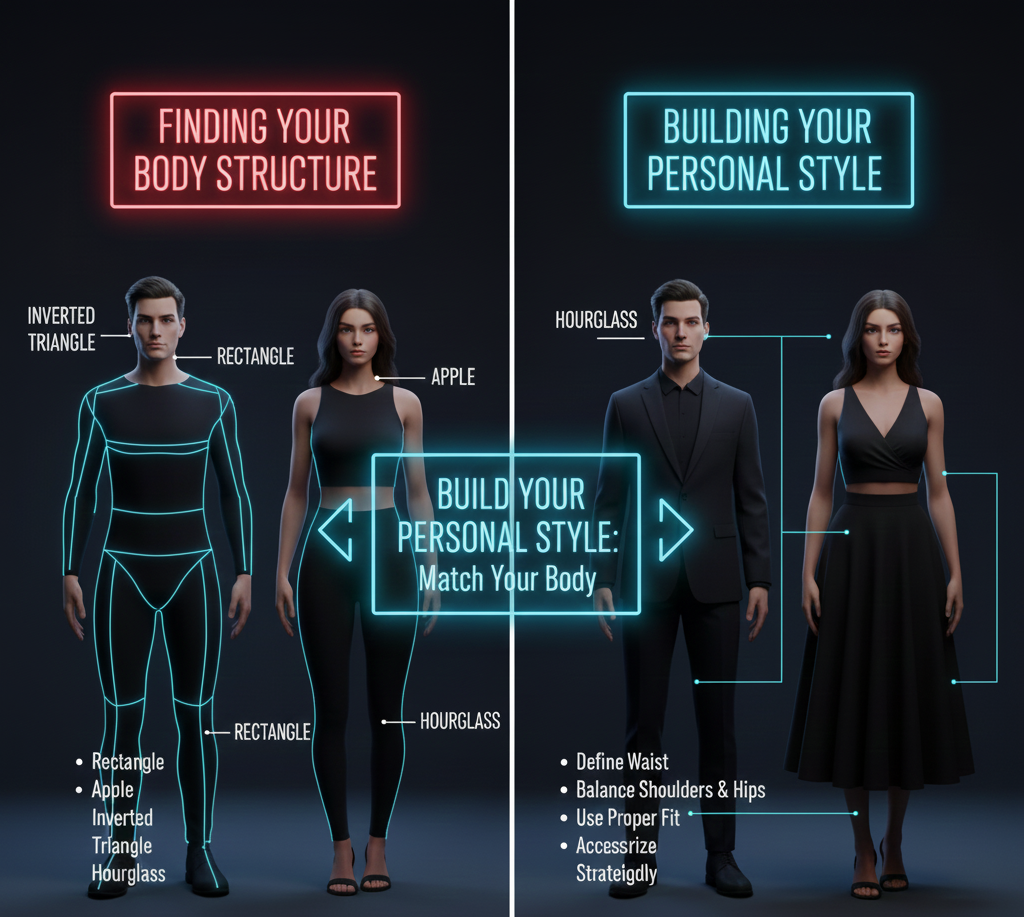
Building a personal style that feels natural and flattering begins with understanding your body’s unique proportions. Instead of relying on trends or copying someone else’s wardrobe, you create a style that works with your structure. This approach leads to outfits that look balanced, intentional, and comfortable.
Understanding Your Natural Silhouette
Your silhouette is shaped by shoulder width, waist definition, hip width, and overall body proportions. Instead of trying to fit into strict categories, observe how your body looks from the front and side. This helps you choose clothing that enhances your natural strengths without forcing yourself into uncomfortable styles.
Analyzing Shoulder, Waist, and Hip Balance
Balanced proportions create visually appealing outfits. If your shoulders are broader than your hips, soft fabrics and deeper necklines can balance your upper body. If your hips are wider, straight or structured tops help bring harmony. Understanding your natural balance prevents outfits from looking top- or bottom-heavy.
The Role of Vertical Proportions
Some people have long legs and a short torso, while others have the opposite. These proportions affect how garments look when worn. High-rise pants lengthen a short torso, while cropped tops balance long torsos. Vertical proportions reveal which cuts create the most harmonious outline.
Choosing the Right Fit for Your Frame
Frame size—small, medium, or large—matters more than body weight. A small frame can get overwhelmed by bulky fabrics and heavy detailing. Larger frames look more balanced in medium-to-big patterns and structured silhouettes. Matching garment scale to your frame prevents your outfit from overpowering you.
Fabrics That Complement Your Shape
Fabrics change the way your body appears. Soft, flowing materials suit curvier structures and create movement. Sturdy fabrics add definition to straighter figures who want more shape. Learning which materials support your silhouette transforms how each outfit falls on your body.
Using Color to Shape Your Appearance
Color placement influences what the eye notices first. Dark tones visually slim areas, while light colors draw attention. Pairing a lighter top with darker bottoms highlights the upper body, while dark tops balance broader shoulders. Strategic color choice can subtly shift proportions without altering the clothing itself.
Structure vs. Relaxation in Outfits
Structured pieces like blazers, tailored trousers, and crisp shirts add shape and enhance posture. Relaxed garments like sweaters, draped tops, and wide-leg pants soften angles and create ease. Mixing both creates a polished yet comfortable wardrobe.
The Importance of Tailoring
Even simple adjustments—hemming pants, taking in a waist, or refining sleeve length—dramatically improve how garments look on your frame. Tailoring customizes clothing to your structure, ensuring your natural lines are highlighted instead of hidden.
Footwear and Its Impact on Proportion
Shoes influence how long or short your legs appear. Pointed toes elongate the leg line, while heavy or chunky shoes add weight to the lower body. Shoe height, shape, and color all affect how your overall silhouette is perceived.
Accessories That Support Your Structure
Accessories guide the eye. Long necklaces elongate the torso, belts define the waist, and the size of a bag should match your frame. Choosing accessories intentionally ensures they complement instead of distract from your proportions.
Building a Cohesive Wardrobe
Once you understand what suits your structure, you begin selecting pieces that consistently flatter you. Your wardrobe becomes more cohesive because each item works with the others and with your natural design. Shopping becomes more efficient and your personal style becomes more recognizable.
Confidence Through Understanding
Personal style is not about rules—it’s about awareness. When you know what supports your body’s structure, you dress with confidence and ease. Over time, this becomes a personal signature that reflects both your physical form and your personality.
Beginning with a comprehension of the distinctive proportions of your body is the first step in developing a personal style that feels pleasing and natural. Rather of depending on trends or imitating the clothing choices of another person, you develop an own style that complements your physical appearance. The result of this method is the creation of ensembles that give off the impression of being balanced, deliberate, and comfortable.
Gaining Insight into the Natural Shape of Your Body
Shoulder width, waist definition, hip width, and general body proportions are the factors that determine the form of your silhouette. Rather of attempting to fit into rigid classifications, take a look at how your body appears from the front and the side. This allows you to choose clothes that accentuates your inherent talents and does not compel you to wear designs that make you feel uncomfortable.
Examining the Equilibrium of the Shoulders, Waist, and Hips
Outfits that are visually pleasing are those that have balanced proportions. Soft materials and necklines that are deeper might be used to balance the top part of your body if your shoulders are wider than your hips. Tops that are straight or structured might assist bring about a sense of balance if your hips are broader. Outfits will not seem disproportionate if you are aware of your natural balance.
The Significance of Vertical Ratios
There are some individuals whose torsos are on the shorter side and whose legs are longer, and there are other those with the opposite body proportions. The way that clothing appears when it is worn is influenced by these proportions. Cropped shirts are an excellent way to achieve a balanced appearance when one has a long torso, while high-rise jeans may help to elongate a short torso. By examining vertical proportions, it is possible to determine which cuts result in the most aesthetically pleasing contour.
Selecting a Frame that is the Most Suitable for Your Needs
The importance of body weight is surpassed by that of frame size, which might be small, medium, or huge. Bulky materials and excessive details may cause a petite frame to seem overwhelmed. Larger frames provide a more balanced appearance when they are paired with structured shapes and medium-to-large patterns. Ensuring that the size of your clothing is appropriate for your frame can avoid your outfit from overwhelming you.
Textiles That Enhance Your Silhouette
The fabrics that you wear may alter the way your body looks. Soft, flowing materials are well suited to curvier forms and help to produce movement. Sturdy textiles are able to offer definition to those with straighter forms who want greater shape. Learning which fabrics support your shape affects the way each clothing falls on your body.
Creating Your Look with the Help of Color
The positioning of colors has an impact on the first perception of the human eye. Areas seem narrower when dark shades are used, but bright colors are more likely to attract attention. The pairing of lighter colored shirts with darker bottoms brings the upper body into focus, while tops that are deeper in color help to balance off larger shoulders. The strategic selection of colors may lead to a little change in dimensions without requiring any modifications to the outfit itself.
Outfits That Are Structured Versus Outfits That Are Relaxing
Structured garments such as blazers, fitted trousers, and clean shirts contribute to a more defined appearance and also help to improve one’s posture. Garments that are relaxed, such as sweaters, draped shirts, and wide-leg trousers, smooth out angles and provide a sense of comfort. A wardrobe that is both stylish and comfortable is created by combining the two.
The Significance of Customization
Even small modifications, like as hemming the trousers, bringing in the waist, or adjusting the length of the sleeves, may substantially alter how items seem on your body. By making adjustments to the garment, tailoring ensures that your natural lines are emphasized rather than concealed, in addition to providing a perfect fit for your body.
Footwear and the way it affects proportionateness
The length of your legs, whether they seem longer or shorter, is affected by the shoes you wear. The elongation of the line of the leg is accomplished by wearing pointed-toe shoes, while the addition of weight to the lower body is accomplished by wearing heavy or chunky shoes. The way that your total silhouette is seen is influenced by the height, form, and color of your footwear.
Accessory Items That Provide Reinforcement for Your Frame
The eyes are directed by accessories. Belts are the ideal accessory for defining the waist, long necklaces make the torso seem longer, and the size of the bag you carry should correspond to the size of your frame. It is important to choose your accessories with care in order to ensure that they are harmonious with your figure rather than distracting from it.
How to Construct a Coordinated Collection of Clothing
You start choosing things that will regularly enhance your appearance when you figure out what looks well on your body type. Your wardrobe will become more unified as a result of the fact that each piece will operate in conjunction with the other items and with your natural design. Shopping becomes more time-efficient, and your own unique fashion sense becomes more apparent.
Confidence Is Developed via Understanding
Awareness is the most important thing when it comes to own style; guidelines are not. You are able to clothe yourself with a sense of self-assurance and comfort when you are aware of what provides support for your body’s structure. This eventually develops into a personal signature that takes into consideration not only your physical appearance but also your personality.