The Endocrine-Disruptor Audit: How to Identify and Avoid PFAS “Forever Chemicals” in Water-Resistant Jackets
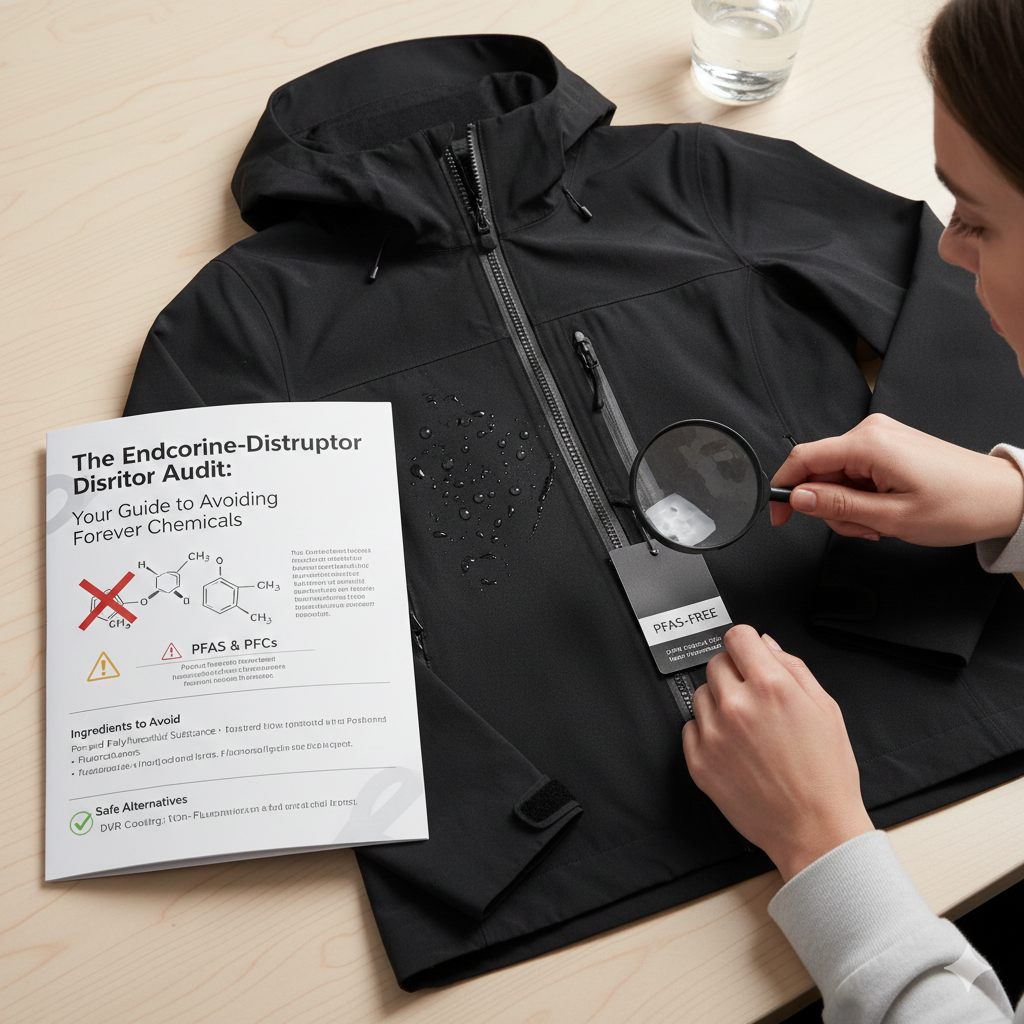
The Endocrine-Disruptor Audit: How to Identify and Avoid PFAS “Forever Chemicals” in Water-Resistant Jackets
People in the year 2026 are becoming more and more conscious of the fact that commonplace things may discreetly impact long-term health in ways that are not evident to the naked eye. As a possible source of chemical exposure, clothing, and particularly outerwear, is now being investigated as a potential source. Although water-resistant jackets are intended to provide protection against wind and rain, a significant number of these jackets depend on PFAS, which are sometimes referred to as “forever chemicals,” inside their construction. Not only are these compounds difficult to decompose, but they also have the potential to build up within the human body over time. Considering that jackets are worn in close proximity to the skin and often for extended periods of time, they provide a continuous exposure route. Particularly vulnerable to the effects of chemical intervention is the endocrine system, which is responsible for the regulation of hormones. The endocrine-disruptor audit is a new idea that has emerged as a result of this. In this audit, customers actively assess clothing depending on whether or not it is safe to wear chemically. More than ever, fashion is not just about style or function; it is also about the influence it has on the body.
PFAS: An Explanation of Their Name and Why They Are Considered to Be Forever Chemicals
The term “PFAS” refers to a set of synthetic compounds that are used in the production of materials that are resistant to heat, water, and stains. These substances are referred to as “forever chemicals” due to the fact that they do not undergo natural degradation in the environment or inside the body. They are able to persist in tissues for years after they have been absorbed. When they were first introduced, these compounds were lauded for their longevity and the performance advantages they offered. On the other hand, their stability is precisely what makes them potentially harmful to biological systems. Inhalation, skin contact, and drinking water that has been polluted are all ways that PFAS may enter the body. As time passes, they build up and cause disruptions to the internal processes. When the year 2026 rolls around, the persistence of these compounds is no longer considered a technical benefit but rather a significant threat to human health.
The Effects of Perfluoroalkyl substances (PFAS) on the Endocrine System
Hormones that are responsible for functions like as development, metabolism, reproduction, and mood are under the direction of the endocrine system. By either imitating or inhibiting the action of natural hormones, PFAS have the potential to disrupt hormonal signaling. This causes the communication networks inside the body to become confused and upsets the body’s internal equilibrium. Due to the fact that hormones function at very low concentrations, even little dosages may have long-term consequences. It has been shown that exposure to PFAS is associated with thyroid malfunction, insulin resistance, and reproductive abnormalities. The risk is not in the acute toxicity but rather in the prolonged exposure to the substance. Due to the fact that jackets are worn on a regular basis, they become a consistent source of low-level hormonal disturbance. When it comes to textile safety concerns in the year 2026, endocrine health is becoming an increasingly important topic.
What Makes Water-Resistant Jackets Extremely Dangerous
Jackets that are resistant to water are among the clothing that are subjected to the greatest chemical treatment in the fashion business. It is common practice for manufacturers to use chemical coatings that include PFAS chemicals in order to achieve waterproofing. Coatings like this provide a barrier that is resistant to both oil and water. This barrier, on the other hand, gradually releases chemicals over the course of time. In addition to friction and heat, perspiration also contributes to an increased risk of chemical migration into the skin. Because of this, outerwear is a significant contributor to the everyday inhalation of chemicals. When a jacket is worn for a longer period of time, the danger of excessive absorption increases. In 2026, functional clothing is being recognized as a concealed chemical interaction with the body. This recognition is taking place.
Chemical Pathways and the Absorption by the Skin
A highly absorbent organ, the skin serves not only as a barrier that protects the body but also as a barrier. When you engage in physical activity or when the temperature is high, your pores open, and the blood flow near your skin rises. The flow of substances into the circulation is facilitated as a result of this. Because of their tiny size, PFAS molecules are able to penetrate the layers of the skin and accumulate in the tissues. When they are inside, they disrupt the hormone receptors and the signaling that occurs inside the cells. It is difficult to identify these tiny interruptions immediately since they are caused by this. Over the course of many years, these seemingly little alterations might accumulate to cause systemic health problems. When the year 2026 rolls around, skin exposure is becoming recognized as a significant route of chemical absorption.
The Methods for Recognizing PFAS in Jackets
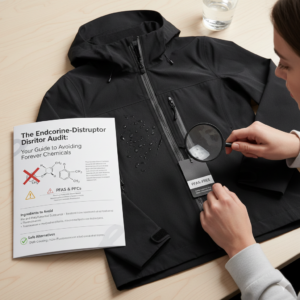
Paying attention to labels and material descriptions is necessary in order to identify clothing that has been treated with PFAS. There is a common association between chemical coatings and terms such as water-resistant, stain-proof, and durable repellent. The use of synthetic treatments is more likely to be present in fabrics that have an abnormally smooth or plastic-like impression. It is possible that labels may not always identify PFAS explicitly; nonetheless, performance claims often indicate the presence of these chemicals. There is an especially significant danger associated with jackets that are meant for usage in harsh weather or outside. Depending on the degree to which a cloth is resistant to water and oil, the likelihood that it will rely on chemical barriers increases. As of the year 2026, customers are becoming more adept at interpreting functional claims as chemical warnings.
Substitutes that are less hazardous than chemical waterproofing
Waterproofing methods that depend on mechanical or natural treatments are becoming more popular as alternatives to PFAS-based waterproofing. Certain textiles are made with fibers that are tightly woven and do not have any chemical coatings on them. Wax-based or plant-derived finishes are used by certain individuals. Despite the fact that these choices may not feel as smooth, they provide comparable protection with a lower level of harmful content. The use of natural fabrics that are breathable in conjunction with a design that is layered may also offer good weather resistance. Despite the fact that these options could need more upkeep, they considerably lower the danger of hormonal imbalance. Performance is being rethought in 2026 to include biological safety as part of the definition. Safer waterproofing is rapidly becoming a significant area of innovation in the garment industry.
This is the problem of bioaccumulation.
The bioaccumulation of PFAS is one of the most hazardous characteristics of these chemicals. This indicates that the chemicals accumulate to a greater extent inside the body than they are able to be eliminated. Existing PFAS will continue to be present in tissues for years even if exposure is stopped. The cumulative toxic load that is produced as a result of this causes the liver, kidneys, and endocrine system to experience stress. As time passes, the body’s ability to regulate hormones and immunological responses becomes less effective. PFAS-related problems often manifest themselves later in life, which is explained by this. A person’s health might be affected by the jackets they wore when they were younger. The notion of bioaccumulation is no longer considered an abstract idea in the year 2026; rather, it is now recognized as a long-term health concern.
Chemical-free outerwear: the future of the industry
Transparency, safety, and designs that are compatible with living organisms are becoming commonplace in the world of outerwear. The demand from customers for apparel that shields them from the elements without causing damage to their internal systems is growing. Because of this, producers are being forced to design performance textiles that are non-toxic. The acceleration of this transformation is being driven by regulatory pressure and increased health awareness. It is possible that chemical-free waterproofing will no longer be considered a specialty but rather a norm in the years to come. Materials are being analyzed in the same manner as food ingredients as the fashion industry is transitioning into a more health-conscious sector. In 2026, the endocrine-disruptor audit ushers in a new age of consumerism that is informed by available information. Jackets that are water-resistant are now evaluated not only by their ability to protect against rain, but also by the long-term biological effect they have.