Dopamine Dressing for Productivity: How High-Saturation Colors Like “Lemon Yellow” Affect Your Focus
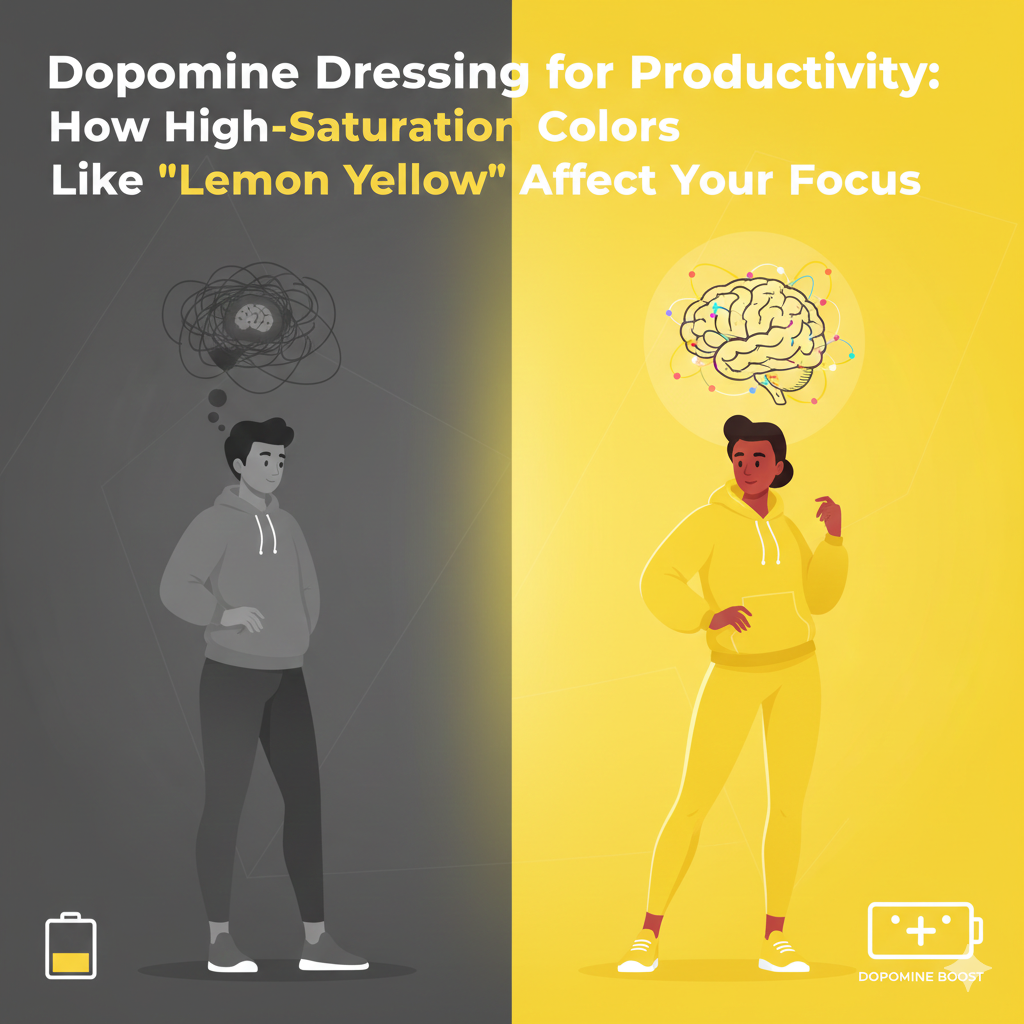
Dopamine Dressing for Productivity: How High-Saturation Colors Like “Lemon Yellow” Affect Your Focus
In the year 2026, productivity is no longer just determined by the ability to manage one’s time or the use of digital technologies; rather, it is determined by the degree to which individuals are able to effectively manage their mental and emotional energies. The notion of dopamine dressing, which focuses on the use of clothing colors to alter mood and cognitive function, is one of the rising ideas that is becoming more prevalent in this transition. Due to the fact that dopamine is a neurotransmitter that is associated with motivation, reward, and attention, it is necessary for having sustained concentration. A growing number of individuals are coming to the realization that visual cues, particularly color, have the ability to directly influence the activity of dopamine in the brain. It is becoming more clear that colors with a high saturation level are particularly effective in eliciting attentiveness and emotional engagement. Owing to the significant psychological influence that it has, lemon yellow has emerged as one of the most talked-about colors. These days, individuals are turning to fashion as a natural way to increase their mental performance, rather than depending simply on stimulants such as coffee. Dopamine dressing is a manifestation of a more fundamental trend in which clothing is increasingly being included into cognitive optimization tactics.
What Is the Relationship Between Dopamine and Mental Performance?
The brain’s ability to process motivation, learning, and behavior that is goal-oriented is crucially dependent on the neurotransmitter dopamine. Individuals have a sense of mental energization and the ability to maintain attention when their dopamine levels are in a state of equilibrium. On the other side, low dopamine levels are often linked to behaviors such as procrastination, boredom, and an inability to concentrate. The brain is continually responding to the cues that it receives from the environment, and one of the most powerful initiators of dopamine release is visual interaction. Throughout the course of the day, clothing serves as a constant visual signal that remains inside the perceptual field of the brain. The colors you wear have the ability to quietly influence your mental state without requiring any conscious effort on your part. In addition to keeping the brain more attentive, high-impact colors also improve the stimulation of the senses. There is growing evidence in the field of neuroscience that visual settings have a significant impact on mental performance in the year 2026.
The Reasons Why Colors with High Saturation Stimulate the Brain
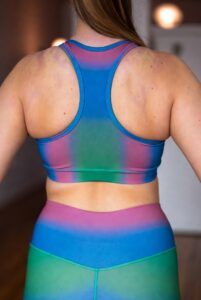
Colours that have a high saturation level are those that give the impression of being vibrant, powerful, and emotionally arousing. When compared to softer or more subdued tones, these colors have a more powerful effect on the visual brain. Neuronal activity in the brain rises and attention becomes more acute when the brain is exposed to a significant amount of visual information. A state of cognitive alertness and mental engagement is produced as a result of this increased stimulus. A significant contributor to mental exhaustion is perceptual dullness, which may be alleviated by the employment of saturated colors. The reason why lemon yellow sticks out is because it reflects a significant quantity of light and is processed by the brain in a relatively short period of time. Because of this, it is difficult to ignore, and it is simple to associate with being more alert. In the year 2026, designers are making conscious use of colors with a high saturation level in order to affect both emotional and cognitive processes.
Lemon yellow’s influence on a person’s mental stability
When it comes to the visible spectrum, lemon yellow is among the hues that are the most stimulating to the nervous system. The sun, warmth, vitality, and mental clarity are all characteristics that are closely connected with it. Yellow is associated with intellectual activity, learning, and decision-making in the brain via this connection. A stimulation of the left hemisphere of the brain, which is responsible for logical thinking and analytical processing, is caused by this hue. A consistent visual indication of activity and preparedness is created when one wears lemon yellow. Through repeated exposure, the brain is conditioned to link the hue with increased levels of productivity and performance. Because of this, it is particularly useful in settings of employment that call for creative thinking and the capability to solve problems. In the year 2026, lemon yellow is becoming more popular as a hue associated with cognitive function.
Inspiration and the Role of Visual Feedback Loops
The effect of dopamine dressing is achieved by a process that is referred to as visual feedback loops. Your brain perceives the fact that you are wearing colors that are lively as a signal of movement and engagement when you see yourself wearing such hues. Small amounts of dopamine are released in response to this visual signal, which in turn increases motivation. One’s conduct tends to become more proactive and task-oriented as one’s level of motivation grows. A cycle of reinforcement is created as a result of this, in which appearance influences mood and emotion influences production. Through the passage of time, the brain develops the ability to correlate certain colors with states of concentrated mental activity. A connection is made between the color lemon yellow and alertness, motivation, and accomplishment. In the year 2026, individuals are actively building these feedback loops in order to construct work habits that are sustainable.
Regulating Emotional Energy Through Color and Color
There is a significant relationship between emotional energy and cognitive function. Even if the duties at hand are straightforward, it is difficult to concentrate when one’s emotional energy is low. Colors with a high saturation bring to an increase in emotional arousal and a decrease in sensations of dullness. Certain hues, in particular lemon yellow, are known to elicit favorable emotional reactions and mental revitalization. As a result of this emotional boost, stress hormones are reduced, and dopamine in the brain is able to work more effectively. As the level of emotional energy rises, the level of mental resistance falls, and the feeling of production becomes more natural. As time goes on, the brain gets more open to receiving new knowledge and to addressing problems. Effective regulation of one’s emotional energy is becoming an essential component of productivity psychology in the year 2026.
Putting on a Dopamine Outfit for Your Work and Study Life
In both professional and academic settings, dopamine dressing is now being used in a strategic manner. Depending on the kind of mental performance they need, people are selecting the colors of their apparel clothing. For creative endeavors, brainstorming sessions, and presentations, lemon yellow is a color that is often employed. Openness, self-assurance, and cognitive flexibility are all developed as a result. The usage of neutral hues, on the other hand, is appropriate for activities that need a high level of attention and less stimulation. Using this individualized color approach, clothes may be transformed into a useful tool for increasing productivity. Individuals develop their unique mental color schemes throughout the course of their lifetimes. The year 2026 marks the beginning of the incorporation of clothing planning with cognitive performance design.
Attention and perception as they are understood by neuroscience
The manner in which the brain makes sense of sensory information has a significant impact on attention. High-saturation colors are able to attract attention more quickly and keep it for a longer period of time than neutral tones. The orienting response in the brain is activated when lemon yellow is present, and this response directs cognitive resources toward engagement. This prevents the mind from remaining in a state of passive observation but rather in a state of active processing. When one’s attention is kept occupied, it is much simpler to avoid distractions. This contributes to the development of stronger attentional networks and improved mental endurance over time. The brain is trained to stay aware for extended periods of time when it is repeatedly exposed to colors that are exciting. For the purpose of attention training in the year 2026, sensory design is being used as a technique.
When it comes to productivity, the future lies in fashion.
In the future, productivity will be achieved via the implementation of integrated systems that merge neuroscience, psychology, and lifestyle design technologies. Dopamine dressing is a straightforward approach that has the potential to significantly improve mental function. High-saturation hues, such as lemon yellow, have the ability to stimulate cognitive activity without being intrusive. They do this by using natural sensory pathways, which in turn boost attention, motivation, and emotional equilibrium. As people become more conscious of the world around them, fashion is becoming a type of psychological engineering. It is getting more deliberate to make clothing selections rather than acting on impulse. To be productive in the year 2026, it is no longer sufficient to only use schedules and applications; rather, it is necessary to plan the full sensory experience of everyday life. That what you wear may have an influence on how successfully you think and execute is shown by the concept of dopamine dressing.