Sunlight Timing for Cortisol Management: Why the First 10 Minutes of Your Day Determine Your Sleep Quality
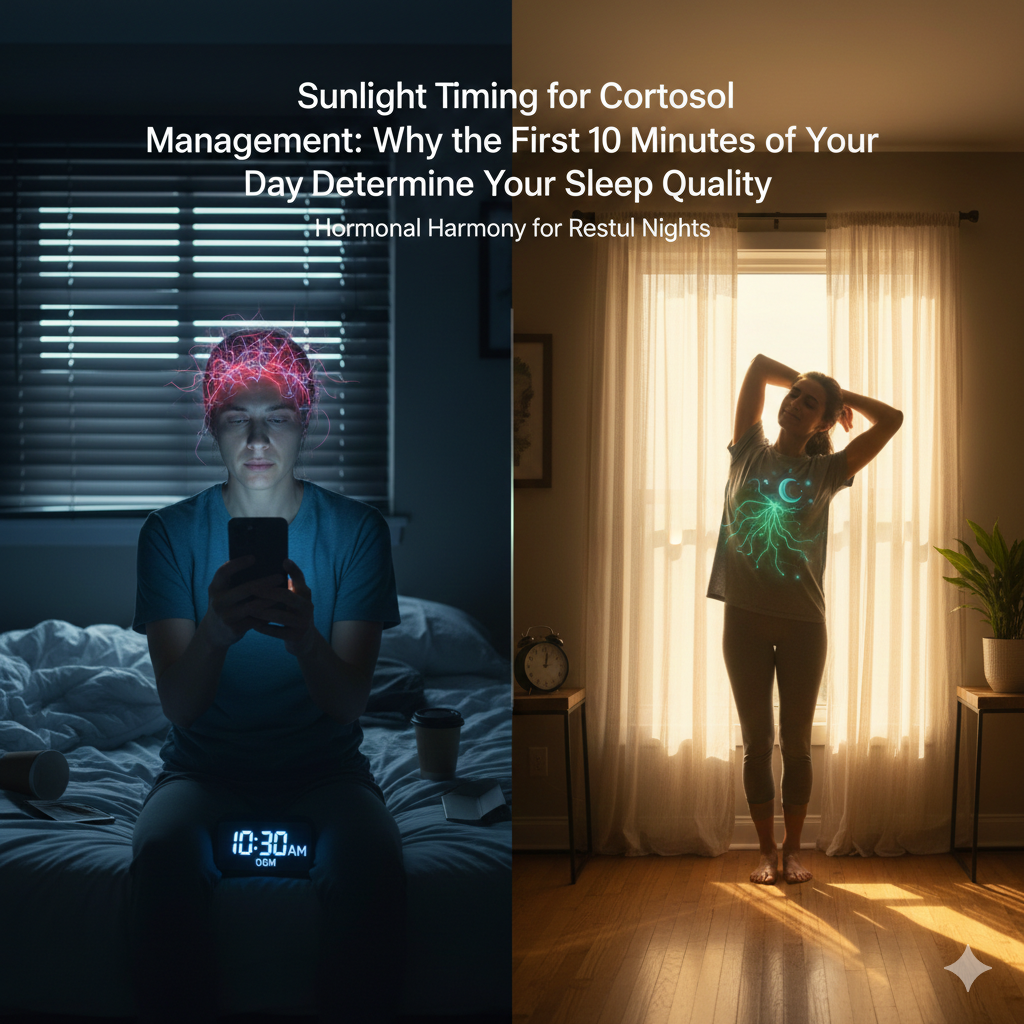
Sunlight Timing for Cortisol Management: Why the First 10 Minutes of Your Day Determine Your Sleep Quality
In the year 2026, it has become an essential component of contemporary wellness practices to have a solid grasp of the relationship between exposure to natural light and the control of hormones. Cortisol is the key stress hormone that regulates alertness, metabolism, and circadian alignment. The time and intensity of morning sunlight have a significant impact on the rhythms of cortisol. It is possible that the suprachiasmatic nucleus, which is the brain’s master clock, may receive vital signals from exposure to natural light for as little as 10 minutes upon waking up. This can assist in the synchronization of internal circadian activities. The right amount of exposure to light at the right time may improve daily alertness, boost metabolic efficiency, and eventually impact the production of melatonin in the evening, which is necessary for restful sleep. These cycles may be disrupted if morning sunshine is not taken into consideration or if artificial illumination is relied upon. This can result in raised cortisol levels in the evening, decreased quality of sleep, and an increased vulnerability to stress and inflammation. When the year 2026 rolls along, it is widely acknowledged that maximizing morning light exposure is a simple but extremely successful technique for achieving hormonal equilibrium and general physiological well-being.
The Effects of Morning Sunlight on the Cortisol Level
The hormone cortisol has a diurnal pattern, reaching its highest point just after waking up and then progressively decreasing as the day progresses. This pattern is reinforced by the morning sunshine, which works as a trigger to notify the body to begin the production of cortisol at the appropriate moment on the schedule. This early peak is beneficial for maintaining mental attention, metabolic preparedness, and cardiovascular balance. An insufficient amount of exposure to natural light in the initial few minutes of the day might cause cortisol patterns to become flattened, which can have a negative impact on energy levels and increase susceptibility to stress. In the year 2026, the practice of intentionally exposing oneself to morning light is seen as a fundamental habit that helps to sustain hormonal and circadian health.
Both the suprachiasmatic nucleus and the synchronization of the circadian rhythm
For the purpose of coordinating the body’s internal clocks, the suprachiasmatic nucleus (SCN) located in the hypothalamus is responsible for integrating light signals that are received via the retina. During the first ten minutes after waking up, the SCN receives information about day-night cycles via exposure to natural light. This information ensures that hormone production, the control of body temperature, and sleep-wake rhythms are all regulated in the appropriate manner. Inadequate morning light may cause the subcortical nucleus (SCN) to become misaligned, which can alter circadian rhythms and have negative effects on cognitive function, mood, and the quality of sleep. In 2026, the SCN will play a pivotal role in the development of methods that aim to maximize everyday physiological performance.
Intensity of Light and Spectrum of Light
There are several different wavelengths of light that are present in natural sunshine, including blue wavelengths, which are especially efficient for triggering the production of cortisol and increasing alertness. This spectrum is often absent from artificial lighting, or it is provided at the incorrect intensity, which reduces the effectiveness of artificial lighting in regulating circadian signals. Even a little exposure to the morning sunshine that is found outside, with its particular spectral properties, is adequate to synchronize the clocks that are found inside the body. When it comes to successful hormonal control in the year 2026, it is essential to place a high priority on the spectral quality and time of light exposure.
The Implications for Metabolic Rate and Energy
The glucose metabolism, energy availability, and cardiovascular function are all improved when cortisol levels reach their highest in the morning when sunshine is present. The post-wake digestion, physical activity, and cognitive functioning are all supported by a morning peak that is scheduled appropriately. On the other hand, cortisol rhythms that are delayed or dampened might have a negative impact on metabolism, lead to increased tiredness, and affect insulin sensitivity. In the year 2026, it is acknowledged that incorporating early light exposure into everyday routines is a natural and non-pharmacological method of improving metabolic health.
The Effects of Evening and the Quality of Sleep
Having the appropriate cortisol peaks in the morning has an effect on the timing of the release of melatonin in the evening. A certain amount of exposure to light in the morning guarantees that melatonin levels increase in a predictable manner at night, which in turn promotes deeper, more restorative sleep. An inadequate amount of exposure may result in a delayed start of melatonin, fragmented sleep, and a reduction in the overall efficiency of sleep processes. In the year 2026, the amount of sunshine that is present in the morning is considered to be an important factor in determining the quality of sleep and the hormonal balance that occurs throughout the night.
Practical Methods for Being Exposed to the Morning Sunlight Position
To get the most out of your experience, it is advised that you go outdoors for at least ten minutes right after you wake up. It is best to do so without wearing sunglasses so that your retinas may get complete stimulation. There is a possibility that exposure via windows may work, but it will be less effective since blue light will be filtered out. Through the combination of light exposure and modest activity, such as stretching or going for a short stroll, it is possible to enhance alertness and metabolic activation. In the year 2026, these measures are seen as therapies that are both practicable and inexpensive, with the goal of improving circadian alignment.
The incorporation of the timing of sunlight into daily routines
The formation of regular hormonal rhythms may be facilitated by including morning light exposure into daily plans in a consistent manner. It is possible to promote circadian synchronization even during shorter winter days or in urban contexts by exposing oneself to full-spectrum light or experiencing brief exposure to the outdoors. The time of sunshine, together with proper sleep hygiene, physical activity, and proper diet, may significantly improve overall physiological balance. In the year 2026, the incorporation of lifestyle choices guarantees that light-based therapies are not only effective but also sustainable.
Possible Dangers and Things to Take Into Account
Despite the fact that morning sunshine is helpful, persons should be cautious to protect their skin and maintain a healthy balance of exposure, particularly in areas with high UV indices. The practice should be guided by timing, duration, and individual skin sensitivity in order to accomplish the goal of minimizing risks of sun damage while yet attaining circadian advantages. In the year 2026, it is advised that individuals use tailored sunshine techniques in order to optimize hormonal balance without sacrificing the long-term health of their skin.
The Prospects for the Circadian Optimization Process Based on Light
Emerging wearable technology and smart home systems are becoming more capable of measuring light exposure, cortisol cycles, and sleep parameters. This enables precise and tailored therapies to be implemented. When technology is combined with natural light practices in the year 2026, it may be possible to achieve highly individualized circadian management. This would result in improved alertness, metabolic health, and restful sleep via the use of informed exposure tactics. Increasing the amount of time spent in the first ten minutes of daylight is now widely recognized as an essential component of daily health and longevity programs.