Zero-Drop Footwear Transition: The Physiological Timeline of Achilles Tendon Lengthening
Zero-Drop Footwear Transition: The Physiological Timeline of Achilles Tendon Lengthening
Over the last several years, zero-drop footwear has been more popular among runners, athletes, and anyone who are looking for a more natural feel whether walking or jogging. Unlike conventional footwear, which raises the heel above the forefoot, zero-drop footwear maintains the same level of the heel and the toe throughout the entire shoe. This design supports a gait pattern that is more similar to the movement that occurred when the wearer was barefoot. The change from traditional footwear to zero-drop shoes involves additional mechanical demands on the lower leg, despite the fact that many users have reported that they have improved their foot strength and posture over time. A considerable adaptation takes place in the Achilles tendon, which is the strong connective tissue that connects the calf muscles to the heel bone. This tendon is one of the most important adaptations. It is possible that moving to flat footwear may initially create an increase in strain in the Achilles tendon. This is due to the fact that traditional shoes often reduce the functional range of this tendon by elevating the heels. Changes in the body’s structure and neuromuscular function are necessary for the body to progressively adapt, but this process takes time and needs cautious advancement.
Recognizing the Zero-Drop Footwear Movement and the Design Philosophy Behind It
The heel and the forefoot must be at the same height in order for zero-drop footwear to be considered a good choice. Typically referred to as the heel-to-toe drop, this discrepancy may vary anywhere from a few millimeters to more than a centimeter in typical sports shoes. Elevated heels provide a subtle change in the center of gravity of the body, which in turn reduces the amount of strain that is exerted on the Achilles tendon while the individual is standing or walking. By removing this elevation, zero-drop designs encourage the ankle to work in a posture that is more neutral. This alignment enables the foot and lower leg to move through their normal range of motion, which is a significant benefit. The rapid removal of heel support, on the other hand, might create fresh stress on tissues that have begun to adapt to a shorter posture. This is due to the fact that many people have worn raised footwear for years.
What Function Does the Achilles Tendon Serve in Movement?
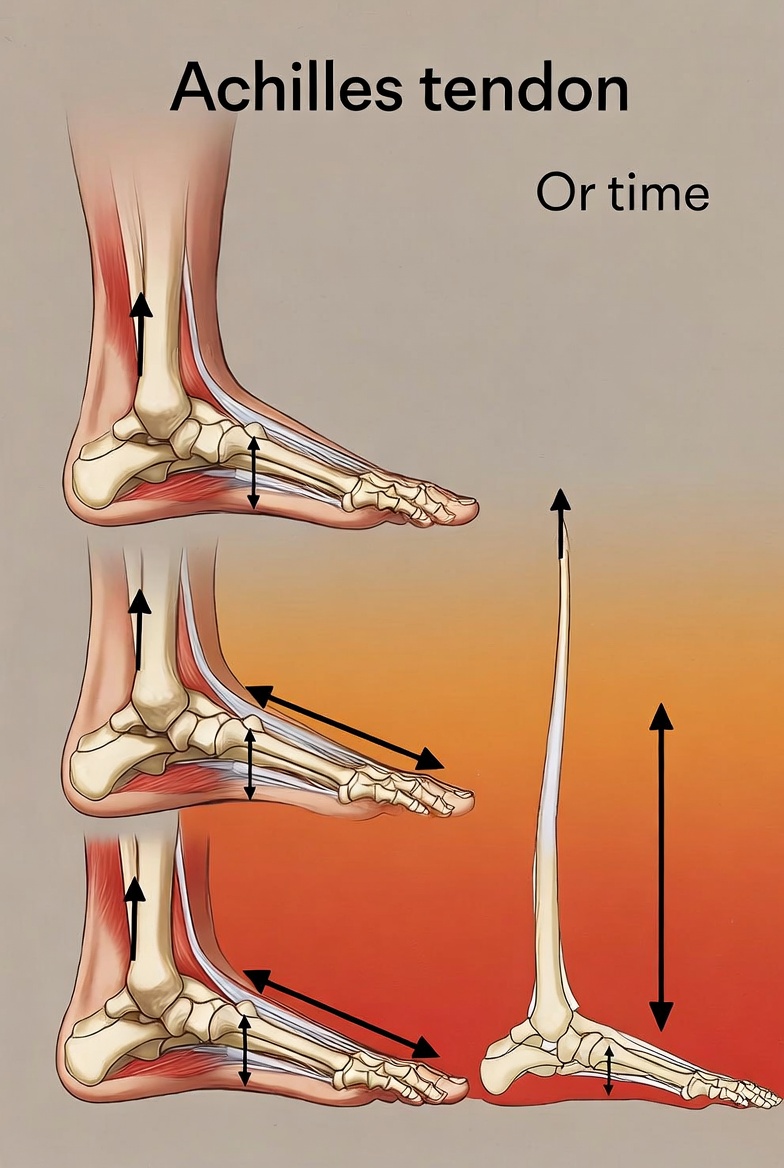
Within the human body, the Achilles tendon is the tendon that is both the biggest and the strongest. By establishing a connection between the gastrocnemius and soleus muscles in the calf and the heel bone, it enables the foot to lift itself off the ground whether walking, running, or leaping. During each stride, this tendon functions similarly to an elastic spring, collecting energy and then releasing it afterwards. Movement causes the Achilles to stretch and then recoil, which results in forward propulsion. This occurs when the heel elevates during movement. During physical exercise, the tendon suffers a significant amount of mechanical strain because of the function it plays in the transmission of energy. Any change in footwear that causes an alteration in the location of the ankle will have an effect on the way that this tendon extends and contracts while the body is in motion.
The manner in which conventional footwear reduces the functional length of the tendon
A raised heel is a common feature of daily footwear, and it has the effect of somewhat shortening the Achilles tendon while the wearer is standing or walking. It is possible that the calf muscles and tendon may become less flexible over time as a result of adapting to this change in length. In normal conditions, this adaptation is not necessarily detrimental; nonetheless, it becomes obvious when a person shifts to wearing shoes that are flat. In the absence of the heel elevation, the ankle will be required to bend more profoundly while walking or running. This increased dorsiflexion exerts a higher stress on the Achilles tendon as well as the muscles in the calf. When people make the switch to zero-drop footwear, they often experience a tightness in their lower legs. This is because the tissues in their legs are beginning to react to the new mechanical demands.
Beginning of the Adaptation Process: Weeks One to Four
When switching to zero-drop footwear, the Achilles tendon and the calf muscles are often the ones that endure the most obvious strain during the first few weeks of the implementation process. On the other hand, the body is abruptly subjected to a wider range of motion in the ankle than it has been used to experiencing in conventional footwear. As a consequence of this, people could experience discomfort or stiffness in the lower leg and at the back of the ankle. In most cases, this soreness is an indication that the tendon is experiencing greater tension as a result of the activity that occurs on a daily basis. More frequent activation of the stabilizing muscles in the foot and lower leg is the first step in the body’s defense mechanism response. The neuromuscular system begins to acclimate to the new movement pattern, despite the fact that the tissues have not yet greatly stretched.
This stage of adaptation lasts between one and three months.
The body starts to create structural adaptations inside the muscle-tendon unit after many weeks of moderate usage. These adaptations are necessary for the body to function properly. In the process of constantly working through a wider range of motion, the calf muscles develop a greater degree of strength and flexibility. It is possible that the Achilles tendon will begin to adapt by being able to withstand a bigger tensile strain at the same time. Improvements in ankle mobility and a decrease in the amount of discomfort experienced when walking or running are characteristics of this phase. A significant number of people observe that their gait starts to shift in a natural way throughout this time period. It is possible that the foot will fall closer to the middle of the foot rather than the heel, which will lessen the impact pressures and make it possible for the tendon to operate more like an elastic spring.
Adjustment over a Long Period of Time: Three to Six Months
Deeper structural changes in both muscle and connective tissue are required for adaptation to take place over a longer period of time. Over time, the Achilles tendon will progressively grow better capable of withstanding prolonged loads while the body is in motion. It is likewise the case that the calf muscles improve their ability to produce force during push-off when the tendon undergoes adaptation. It is possible that this increased efficiency will lead to a more fluid stride whether walking or running. When compared to the first weeks of transition, many people report that they are experiencing a much reduced level of stiffness in their lower leg at this present time. This means that the body has successfully re-calibrated its movement patterns in order to fit the design of the flat footwear.
Modifications to the Mechanisms of Walking and Running
When individuals switch to footwear with zero drop, it often causes a change in their movement patterns. When walking or running, traditional shoes like those with elevated heels urge the wearer to land on their heels first. In contrast, shoes with zero drop tend to encourage contact with the ground either in the middle of the foot or in the forefoot. This alteration alters the way in which forces pass through the lower leg, foot, and ankle. When it comes to receiving and releasing energy throughout each stride, the Achilles tendon makes a significant contribution. It is possible that these adjustments will, over time, increase both running economy and foot strength. On the other hand, the adjustment phase is necessary because rapid changes in gait mechanics might raise the risk of injury if the body is not given the opportunity to adapt gradually.
A Secure Method of Managing the Transition
Adapting to zero-drop footwear successfully is primarily dependent on properly managing the shift from one kind of footwear to another. The Achilles tendon and the calf muscles are able to grow because of gradual increases in wear time, which prevents undue tension on the muscles. It is possible to assist divide the strain among various tissues by switching between regular shoes and zero-drop models throughout the early stages of the game. It is possible to further enhance the adaption process by doing stretching exercises and mobility training on the calves and ankles. It is crucial to pay attention to the signs that the body sends out, since prolonged discomfort may be an indication that the tissues are beginning to get overwhelmed. By exercising with patience and gradually increasing the intensity of the workout, the lower leg may build the flexibility and strength necessary for comfortable mobility while wearing zero-drop footwear.