The “Digital Detox” Travel Trend: Why Bio-Harmony Retreats are Replacing Traditional Luxury Spas
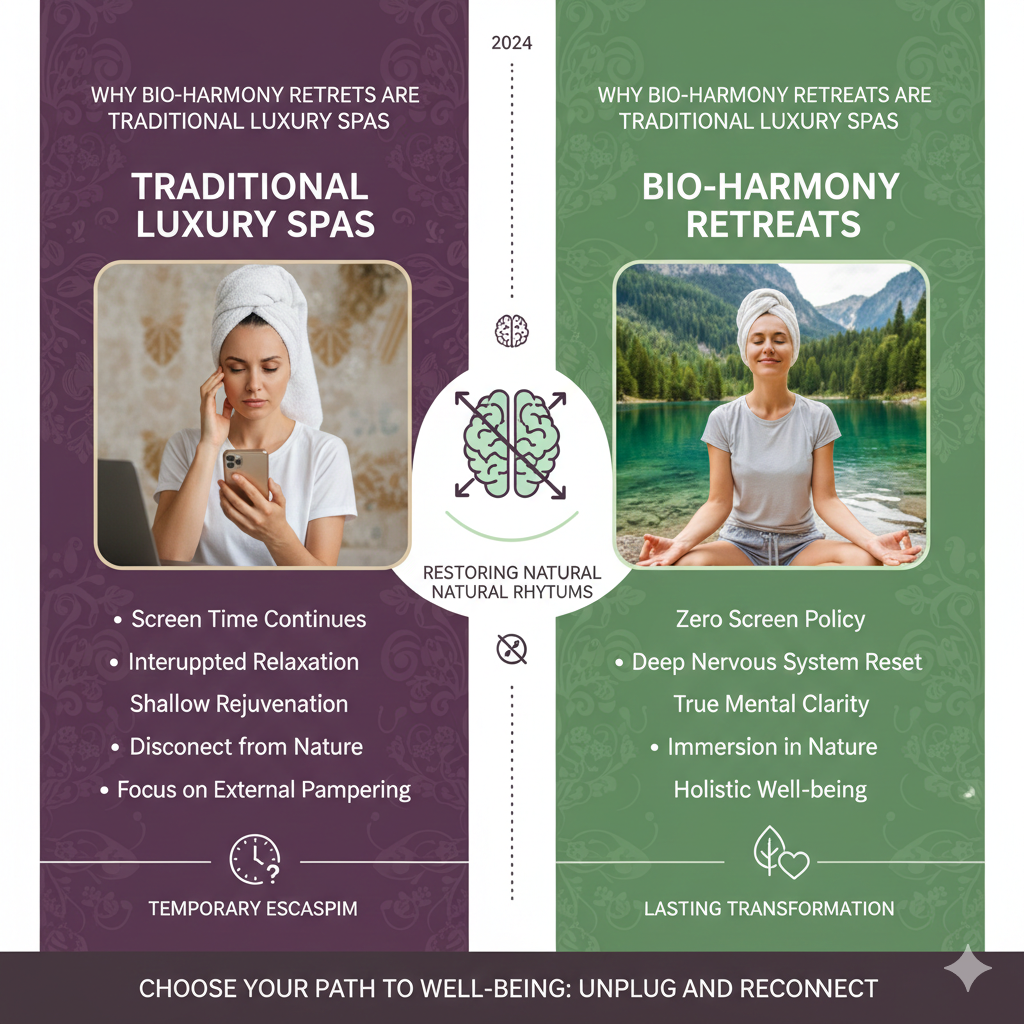
The “Digital Detox” Travel Trend: Why Bio-Harmony Retreats are Replacing Traditional Luxury Spas
Through the year 2026, travel patterns are shifting to place a greater emphasis on mental rejuvenation, physiological equilibrium, and sensory re-calibration than they do on traditional luxury facilities. Retreats that focus on bio-harmony have developed as the next generation of health destinations. These retreats provide travelers with immersive experiences that are intended to lessen the effects of digital overstimulation and restore hormonal, circadian, and neurological system balance. The purpose of these retreats is to provide a deliberate separation from screens, organized exposure to nature, and tailored health routines. This is in contrast to typical luxury spas, which place an emphasis on comfort and pampering their guests. Recalibration of the guests’ bodies and minds is accomplished by the participation in individualized movement sessions, mindful practices, and activities led by biofeedback training. As people become more aware of the dangers of digital burnout and chronic stress, they are looking for experiences that cater to their more profound physiological and emotional requirements rather than just satisfying their need to indulge. By integrating environmental design, behavioral science, and technology-free immersion, bio-harmony retreats are an example of a contemporary wellness travel method that is guided by scientific research.
Emergence of Digital Overload as a Trend
Over time, prolonged exposure to electronic devices such as smartphones, tablets, and displays has been associated with sleep disturbances, elevated levels of stress, and increased activity in the sympathetic nervous system. The constant presence of alerts, exposure to blue light, and an excessive amount of information all work together to undermine cognitive concentration and emotional resilience. As a response to this digital load, bio-harmony retreats are designed to provide situations that allow for little involvement with technological devices while also developing attentive awareness. The quality of the visitors’ sleep, mental clarity, and physiological balance may all be enhanced by the purposeful reduction of sensory and cognitive stress. The management of digital stress will be an essential component in the development of successful wellness travel experiences in the year 2026.
Retreats Guided by the Core Principles of Bio-Harmony
Retreats that focus on bio-harmony use environmental, behavioral, and physiological methods in order to bring about a state of equilibrium. Personalized dietary regimens, natural light cycles, and activity that is in sync with circadian rhythms all work together to promote hormonal balance in a synergistic manner. Downregulation of the nervous system may be achieved by techniques such as mindfulness practices, controlled sensory settings, and immersion in natural surroundings. Guests are strongly encouraged to participate in activities that enhance self-awareness and rehabilitation while also engaging in planned intervals of digital detoxification. The retreats that are being discussed here reflect a comprehensive approach to wellbeing in the year 2026, going beyond the concept of superficial relaxation.
Integration of Movement and Somatic Experience
Movement is at the heart of bio-harmony experiences, which include yoga, moderate mobility exercises, and other somatic practices that bring about the release of tension that has been stored. The purpose of the sessions is to enhance the flow of lymphatic fluid, improve posture, and bring the nervous system into harmony with its natural rhythms. In contrast to conventional spas, which often place an emphasis on passive treatments, movement-based rehabilitation, which encourages active engagement, is known to improve long-term resilience. As of the year 2026, it is widely acknowledged that the combination of somatic awareness and digital detox practices is an essential component of successful wellness therapies.
A Therapeutic Medium Derived from Nature
One of the most important aspects of bio-harmony retreats is the opportunity to spend time in natural settings, such as woods, bodies of water, and open landscapes. As a result of being immersed in nature, sympathetic activation is reduced, cortisol levels are lowered, and heart rate variability is improved. Enhanced healing benefits may be achieved by the use of curated sensory experiences, such as sound therapy that utilizes natural acoustics and regulated light exposure. Retreats place an emphasis on the design of their environments, with the goal of promoting quiet, concentration, and isolation from digital stimuli. In the year 2026, nature therapy is no longer a luxury that may be chosen, but rather an essential component of wellness travel that is founded on scientific research.
Alignment of the Circadian Rhythm and Nutrition
Retreats that focus on bio-harmony provide an emphasis on meals that are in sync with circadian cycles, which helps to improve metabolic efficiency, intestinal health, and hormonal equilibrium. In order to maximize digestion and energy levels, combinations of whole meals that are rich in nutrients and timing methods are used. Nutritional treatments are individualized programs that are based on the physiological requirements of the individual. These programs may involve targeted supplements or intermittent fasting intervals. Food is acknowledged as an essential component in the process of bringing internal systems into harmony during digital detox programs in the year 2026.
Practices of Mindfulness and Cognitive Reset
Recalibrating attention, lowering stress levels, and restoring cognitive flexibility are all benefits that visitors may experience via the practice of mindfulness, guided meditation, and sensory-focused activities. A greater involvement with both internal and external experiences is made possible by surroundings that are devoid of digital technology. These environments inspire presence and introspection. In order to assess gains in heart rate variability and stress response, practices are often complemented by biofeedback or wearable monitoring. The year 2026 marks the year when cognitive rejuvenation is seen as being just as important as physical relaxation in terms of successful wellness vacation.
Examining the Differences Between Traditional Luxury Spas and Bio-Harmony Retreats
The traditional luxury spas have a primary emphasis on comfort, pampering, and beauty treatments, and they often pay little attention to the physiological or digital pressures that their clients may be experiencing. Unlike other types of retreats, bio-harmony retreats combine comfort with deliberate intervention, focusing on mental, emotional, and systemic rehabilitation. In spite of the fact that both promote relaxation, bio-harmony experiences produce demonstrable benefits in sleep, stress indicators, and general wellbeing. These changes are led by personally tailored procedures that are founded on science. Twenty-six years from now, wellness tourists will place a greater emphasis on experiences that are results-driven rather than passive enjoyment.
Travel for Wellness: What the Future Holds
There is a growing awareness of the negative effects of digital overload and chronic stress, and bio-harmony retreats are set to become the most popular form of health travel. New benchmarks for restorative travel will be established via the incorporation of circadian-aligned programming, somatic movement, nutrition, and sensory design. It is possible that technology will continue to be used in the background in order to monitor physiological indicators and customize therapies; however, the amount of active digital involvement will stay as low as possible. The move from conventional luxury to bio-harmony indicates a paradigm shift in wellness tourism in the year 2026. This shift places an emphasis on verifiable repair and long-term resilience rather than superficial enjoyment.