The Shoe Toe-Box Crisis: How Pointed Boots Deform Metatarsal Alignment and Cause Plantar Fasciitis
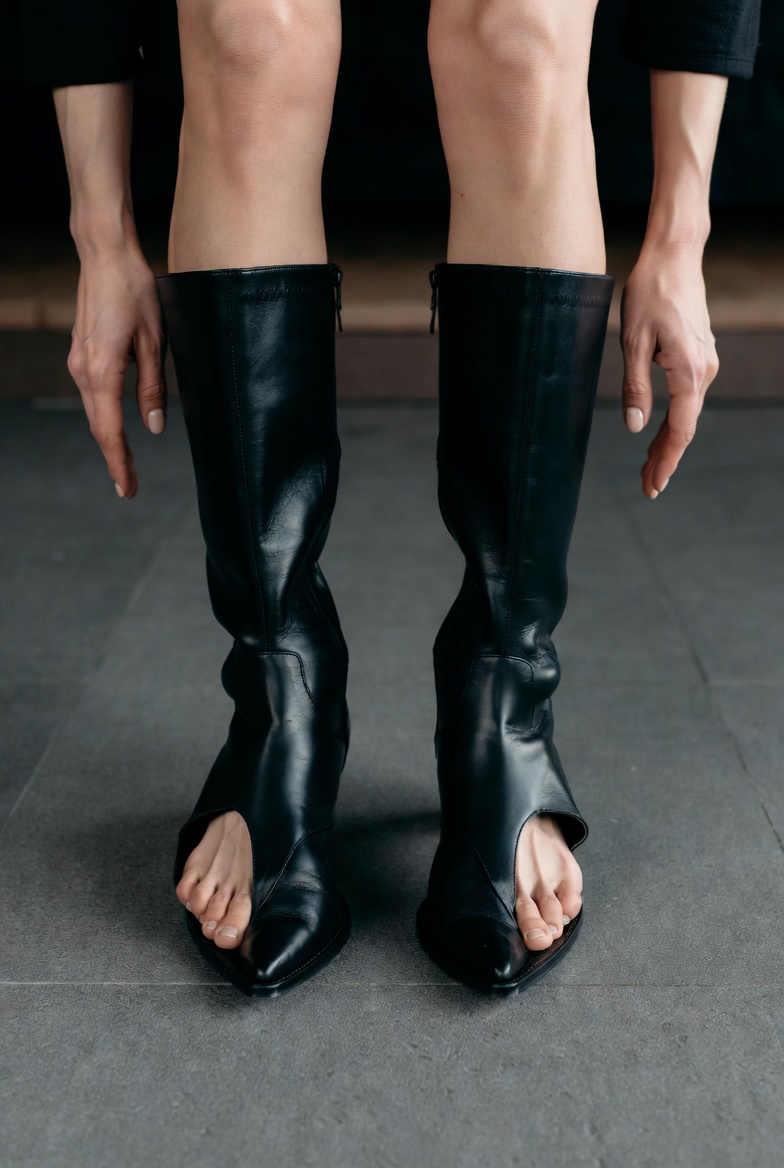
The Shoe Toe-Box Crisis: How Pointed Boots Deform Metatarsal Alignment and Cause Plantar Fasciitis
Despite the fact that the design of footwear has a direct impact on the biomechanics of the lower limbs, aesthetic trends often place a higher priority on look than on anatomical function. Among the many examples of style-driven design that may affect the normal shape of the foot over time, pointed boots are a frequent example. These boots are characterized by tiny toe boxes and tapering fronts. It is possible that they may feel okay for short amounts of time, but extended usage can cause the forefoot to get compressed, which will force the toes into positions that are not natural. This compression has an effect on the position of the metatarsal bones, which are particularly important for maintaining balance and distributing weight while walking. Over time, these structural alterations may be a contributing factor in the development of disorders such as plantar fasciitis, as well as discomfort and instability. Having an understanding of the link between the design of the toe box, the structure of the foot, and the biomechanical stress gives insight into the reasons why the footwear choices that one makes may have long-lasting effects on mobility and general foot health.
What the Forefoot Looks Like in Its Natural Form
There are five metatarsal bones that make up the forefoot. These bones link the midfoot to the toes, creating a structure that is both solid and flexible, allowing it to bear weight and contribute to propulsion. while a person is in their natural form, their toes are slightly wide apart, which enables them to distribute pressure evenly while they are standing or exercising. This alignment helps to maintain balance and ensures that gait mechanics are efficient. It is especially important to note that the big toe is responsible for both the stabilization of the foot and the generation of forward motion. The manner in which power is conveyed through the foot may be influenced by any disturbance to this natural spacing, which can then lead to compensating adjustments being made in other parts of the body.
How Pointed Toe Boxes Transform the Structure of the Foot
Because pointed boots squeeze the toes into a small area, they hinder the toes’ ability to expand out in a natural manner. As a result of this forced posture, the toes are pushed inward, which often results in the big toe heading in the direction of the fingers. This misalignment might become semi-permanent over time, which will result in a change in the structure of the forefoot of the foot. There is a possibility that the metatarsal bones will move slightly as they adjust to the restricted space, which will result in an uneven distribution of pressure. Not only does this shift in alignment have an impact on comfort, but it also causes a disruption in the mechanical efficiency of the foot while walking and standing.
Differentiation of Pressure and Uneven Distribution of Load
Under compression of the toes, there is a considerable shift in the distribution of the body’s weight over the foot. There is a concentration of pressure on select places, typically the ball of the foot, rather than uniformly distributed throughout the foot. This concentrated tension places an increased burden on certain metatarsals, which makes those metatarsals more prone to strain and pain. It is possible that inflammation, discomfort, and a reduction in shock absorption might develop over time as a result of prolonged exposure to unequal pressure. There is an increase in the likelihood of further issues occurring as a result of the foot’s diminished capacity to perform its duty as a balanced support structure.
repercussions for the mechanics of walking and gait
Walking requires a series of synchronized motions that begin with heel contact and terminate with toe-off. This sequence of actions is essential to walking. Because they are responsible for supplying stability and propulsion, the toes, and particularly the big toe, play an important part in the final phase. This phase becomes less effective when the toe alignment shifts as a result of wearing footwear that is too small. To compensate, the body may transfer weight to different regions of the foot or adjust stride patterns. Both of these options are possible alternatives. Variations in gait mechanics may result from these adaptations, which may, over time, have an impact not just on the feet but also on the ankles, knees, and hips.
The Relationship Between the Development of Plantar Fasciitis
Plantar fasciitis is a disorder that is defined by inflammation of the plantar fascia, which is a thick band of tissue that runs down the bottom of the foot. During movement, this tissue acts as a shock absorber and provides support for the arch. When there is a disruption in the alignment of the metatarsals, the distribution of forces across the foot alters, which puts pressure on the plantar fascia. As a consequence of repeated stress, microtears and inflammation may develop, which can contribute to heel discomfort and stiffness. Because pointed boots produce a change in the mechanics of the foot, they may consequently indirectly contribute to the development of plantar fasciitis.
The reduction of shock absorption and support for the arch
Because of its inherent structure, the foot is able to absorb impact and adjust to a variety of surfaces. When the toes are aligned correctly, the foot is able to expand slightly under stress, which permits forces to be distributed properly. Toe boxes that are too narrow inhibit this expansion, which in turn reduces the foot’s capacity to absorb stress efficiently. With each stride, the arch and heel get a greater amount of force as a consequence of this. Because of the greater impact, the components that support the foot, such as the ligaments and tendons, might get strained. Over time, a decrease in shock absorption may be a contributing factor in the development of chronic stress and weariness.
Alterations in the Foot’s Structure Over Their Long-Term
Footwear that is too tight for an extended period of time might cause structural changes in the foot that are long-lasting. It is common for shoes that are too thin or too pointed to cause conditions such as metatarsalgia, bunions, and hammertoes. Alterations like this take place gradually as the foot adjusts to the frequent compression and changing alignment that it experiences. Once formed, it may be difficult to reverse them without the participation of a third party. When choosing footwear, it is essential to take into account the long-term health of the foot because of the cumulative impact of these alterations.
Selecting Footwear That Allows for Comfortable Natural Alignment
Choosing footwear that has a toe box that is broader enables the toes to stretch out in a natural manner, which helps to maintain good alignment and balance. There is a correlation between footwear that conforms to the natural shape of the foot and the maintenance of equal pressure distribution and efficient movement patterns. In addition to reducing strain on the structures of the foot, using flexible materials and supportive soles further enhances comfort. Alternating between various kinds of footwear and reducing the amount of pointed designs you wear are two more potential ways to reduce the long-term damage. Individuals are able to safeguard their foot health while keeping their functional mobility if they give anatomical fit more weight than solely cosmetic concerns.