Compression Socks for Desk Workers: The Hemodynamics of Preventing Venous Stasis
Compression Socks for Desk Workers: The Hemodynamics of Preventing Venous Stasis
Sitting for extended periods of time has become a distinguishing characteristic of contemporary work settings, especially for professionals who work at desks and spend hours in a stationary posture. Despite the fact that this activity may seem to have a modest influence on the body’s physical health, it really causes a tremendous pressure on the circulatory system, particularly in the lower limbs. Venous stasis, also known as the accumulation of blood in the veins, is a typical manifestation of decreased mobility. This condition may result in pain, edema, and long-term problems with the cardiovascular system. Within the realm of practical interventions, compression socks have evolved as a means of bolstering circulation during lengthy periods of inactivity. Through the application of regulated pressure to the legs, these customized garments have the ability to influence the flow of blood back toward the heart. By gaining an understanding of the hemodynamics that underlie compression treatment, one may better comprehend the reason why these socks are becoming more suggested for those who are working in sedentary environments and want to preserve their vascular health.
What You Need to Know About Venous Return in the Lower Limbs
Lower body blood circulation is dependent on a well-coordinated system of veins, valves, and muscle contractions in order to function properly. When it comes to pumping blood upward against gravity, veins are dependent on external forces, in contrast to arteries, which are able to profit from the direct pumping activity of the heart. It is the calf muscle pump that is considered to be one of the most essential processes that assist this process. The compression of the veins and the transport of blood toward the heart are both caused by the contraction of the muscles that occur during walking or other forms of movement. A sitting posture, on the other hand, causes this mechanism to become mostly inactive, which decreases the efficiency of venous return and increases the chance of blood pooling in the legs.
Why does venous stasis occur, and what exactly is it?
When the flow of blood via the veins slows down or becomes stagnant, a condition known as venous stasis develops. It is usual for this syndrome to be coupled with prolonged immobility, such as sitting for lengthy periods of time without moving at all. Increasing the amount of blood that pools in the lower limbs causes an increase in pressure inside the veins and the tissues that surround them. Stiffness, heaviness, and weariness in the legs are some of the symptoms that may result from this condition. Over the course of time, chronic venous stasis may be a contributing factor in the development of more significant disorders, such as varicose veins and inefficient blood circulation. It is not a general lack of blood flow that is the root cause of the problem; rather, it is an imbalance in the efficiency with which blood is returned to the heart.
Understanding the Workings of Compression Socks
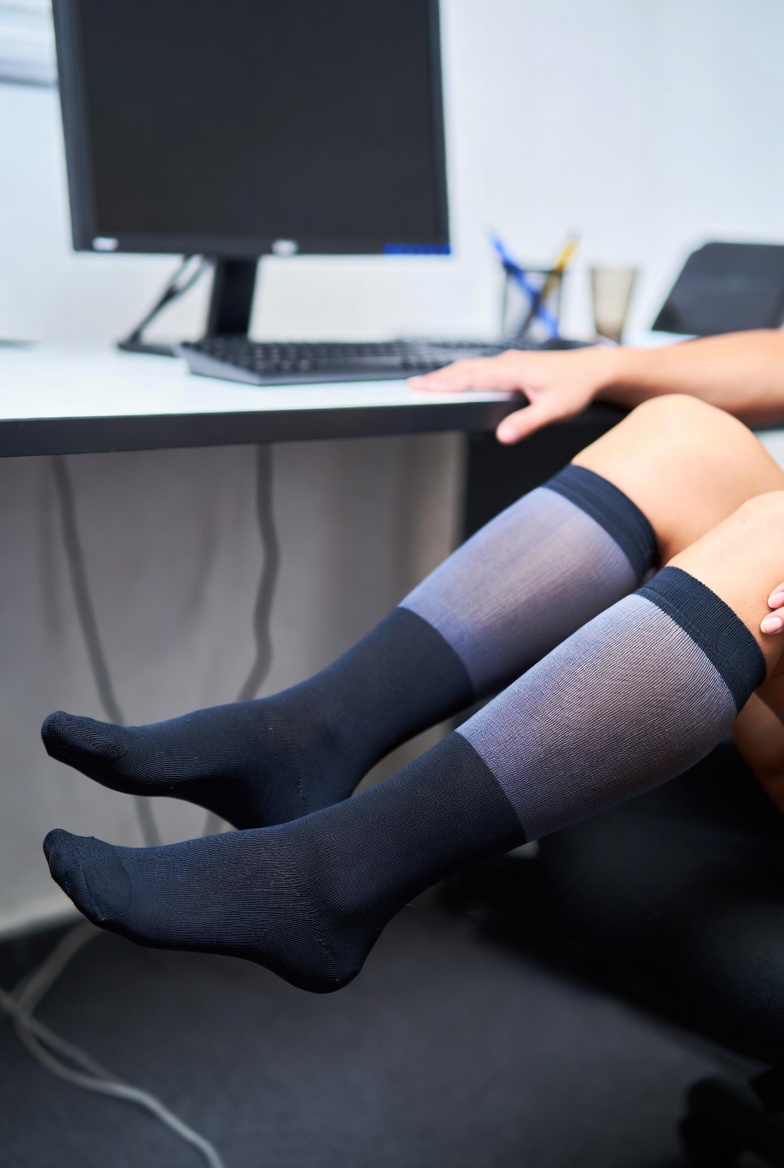
The purpose of compression socks is to provide applied pressure in a progressive manner over the length of the leg, with the most pressure being applied at the ankle and gradually reducing pressure as it moves toward the knee and calf positions. In order to combat the effects of gravity, this gradient stimulates blood to travel higher. Through the application of gentle compression, these socks are able to shrink the diameter of the veins, therefore increasing the rate at which blood flows through the veins. It is less probable for blood to pool when it is flowing more quickly, which improves circulation overall. Even when the body is not actively moving, the design is able to provide passive support since it imitates the natural action of the calf muscle pump.
The Effects of Hemodynamics on the Velocity of Blood Flow
The capacity of compression socks to increase the velocity of blood flow is the fundamental hemodynamic advantage that these socks provide. Compressing veins causes the amount of blood contained inside them to diminish, which in turn results in a more streamlined flow of blood. The result is a decrease in turbulence and an increase in circulation efficiency. There is also a correlation between increased velocity and the prevention of stagnant zones, which are areas where blood may collect. Through the maintenance of a steady flow, compression socks facilitate the continuous passage of blood through the venous system. This, in turn, reduces the likelihood of blood pooling and the pain that is traditionally associated with it.
Capillary filtration and fluid balance are also affected by this.
Compression socks have an influence on the movement of fluids between blood vessels and the tissues that surround them, in addition to having an effect on the flow of blood. The accumulation of fluid in the interstitial space might be a consequence of elevated pressure inside veins, which can result in edema. By lowering the pressure in the veins, compression socks assist to reduce the amount of fluid that leaks out. The end outcome is a reduction in edema in the lower limbs as well as an improvement in fluid balance. The effects of this action are especially advantageous for those who work at desks and have swelling in their ankles after sitting for extended periods of time. Additionally, maintaining correct fluid distribution is beneficial to the health of tissues and promotes comfort.
In order to facilitate the operation of the venous valves
As blood moves toward the heart, veins have valves that only allow blood to flow in one direction, preventing blood from flowing in the other direction. It is possible that these valves may not seal properly when veins become swollen as a result of pooling, which would enable blood to flow counter to its intended path. By assisting in the preservation of the structural integrity of the veins, compression socks make it possible for the valves to perform their functions correctly. These garments increase the overall efficiency of the venous system by reducing the possibility of reflux and maintaining the veins in a form that is more ideal. For the purpose of preserving vascular health over the long term, this assistance is essential.
The Reduction of Fatigue and Discomfort in Work That Is Sedentary
The decrease of leg weariness and soreness that occurs as a result of sitting for extended periods of time is one of the most visible advantages of wearing compression socks. By enhancing circulation, one may more effectively remove waste products from the body’s metabolic processes while also delivering oxygen and nutrients to the tissues. In addition to reducing muscular fatigue in the legs, this may also ease the feeling of heaviness. This results in increased comfort for those who work at desks, which in turn may lead to higher concentration during the course of the workday. It is important not to undervalue the psychological advantage that comes from a reduction in physical pain since it helps to overall productivity and well-being.
The Practice of Including Compression Socks in One’s Regular Work Process
A basic method for promoting circulatory health in a workplace that is characterized by sedentary behavior is to include compression socks into one’s daily routine. In order to achieve maximum efficiency, it is essential to choose the optimal amount of compression and to make certain that the garment fits properly. Despite the fact that these socks provide passive support, they are most beneficial when accompanied with frequent activity, such as standing, stretching, or taking pauses to walk. The combination of these two factors improves the natural processes of circulation while simultaneously lowering the hazards that are connected with sitting for extended periods of time. Compression socks provide a practical option for maintaining healthy blood flow and minimizing venous stasis. They do this by addressing the hemodynamic problems that are associated with desk employment.